

Key Takeaways
- Courier suits small, urgent shipments, while cargo handles bulk, planned logistics.
- Both cargo and courier use chargeable (actual vs volumetric) weight. Air cargo commonly applies L×W×H ÷ 6000.
- Courier offers faster, door-to-door service, but cargo achieves lower unit cost for large consignments.
- Customs clearance is usually bundled with courier, but cargo may require forwarding or brokerage agents.
- Decision rule: under 30 kg = courier. Bulk pallets or containers = cargo.
Booking a shipment but unsure if it counts as courier service or cargo service? You’re not alone, in fact these terms are often mixed up yet the difference matters a whole lot.
Why? Because It affects cost, speed, documentation, and even whether your package arrives on time.
Today, we will break down the two in plain terms and how to choose either courier or cargo depending on your needs, business size and goals. So let’s begin!
What is a Courier Service?
Courier = speed, convenience, and last-mile precision.
When you think of a courier, you’re probably picturing the rider who brings your Shopee or Lazada orders, or the van that drops off a souvenir from a friend abroad.
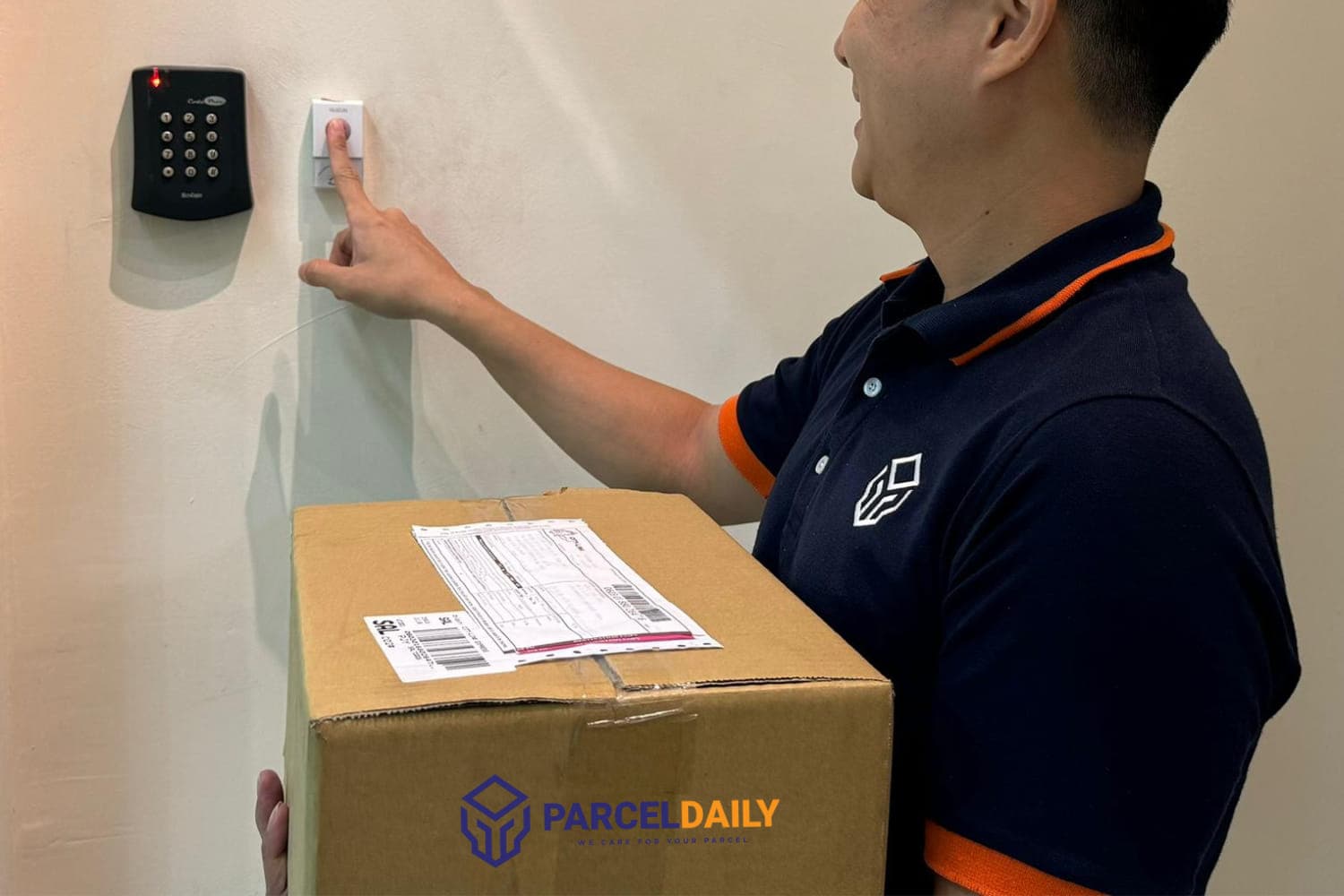
Courier services specialise in small, urgent shipments that need to move fast, whether across town or across borders. Instead of handling massive pallets, couriers deal with parcels that can be picked up, tracked, and delivered to you..
Best For
- Urgent documents like contracts, invoices, or legal files
- Online shopping parcels and e-commerce orders
- Sensitive items such as electronics, gifts, or medical supplies
Notable Features
- Door-to-door delivery: Picked up at your location, delivered straight to the recipient
- Speed options: Same-day within cities, 1–3 days across Peninsular states, 5-7 days across East Malaysia, while international shipping varies.
- Real-time tracking: Mobile apps and SMS updates keep you informed from dispatch to delivery
- Cash on Delivery (COD): Couriers can collect payment on your behalf when the parcel is delivered, vital for online sellers and SMEs building customer trust
- Bundled services: Some include insurance, signature on delivery, or free redelivery attempts
Example
A small online shop in KL receives an order for skincare products at noon. The seller books a courier pickup the same day, and the parcel is on its way within hours. By the next evening, the customer in Penang receives the neatly packed order at their doorstep, tracked and delivered without delay.
What is a Cargo Service?
Cargo = bulk logistics for planned, heavy consignments.
Unlike couriers, cargo delivery isn’t designed for speed or small parcels. Instead, they focus on moving large volumes of goods efficiently, often across longer distances and international borders.
Whether it’s by air, sea, truck, or rail, cargo handles the kind of shipments that are too heavy, too bulky, or too costly to send through regular couriers.
Best For
- Importing or exporting wholesale goods
- Shipping industrial machinery or spare parts
- Consolidating bulk orders into pallets or containers
- Restocking inventory across borders (KL → Singapore, Port Klang → Jakarta)
Notable Features
- Cost efficiency at scale: Cheaper per unit when shipping large volumes compared to courier rates
- Multimodal options: Air cargo for speed, sea freight for economy, trucking or rail for regional transport
- Flexible load types: Full container load (FCL) or less-than-container load (LCL) for sea freight, palletised shipments for air/truck cargo
- Customs & documentation: More complex than courier; often requires forwarding agents or brokers
Example
A distributor in Penang needs to send a 1-tonne pallet of consumer electronics to their partner in Jakarta. Using sea cargo, the shipment is consolidated into a container at Port Klang, crosses by sea to Tanjung Priok, and arrives at the Jakarta warehouse in just over a week, at a fraction of the per-item cost of courier.
“Cargo charges are based on whichever is higher, actual weight (kg/tonne) or volumetric weight (length × width × height ÷ 6000). This ensures bulky but lightweight goods (like plastic containers) are priced fairly.”
Source: IATA Knowledge Hub
When to use Courier or Cargo
| Factor | Courier | Cargo |
| Uusal Shipment Size | < 30 kg (documents, small parcels) | > 100 kg (pallets, containers) |
| Speed | Same-day to 5 days | 3 days to several weeks |
| Paperwork | Minimal, often bundled | More complex, may need forwarding agent |
| Cost Basis | Per parcel / item | Weight or volume (whichever higher) |
| Best For | Urgent, door-to-door, smaller shipments | Bulk, recurring, or planned logistics |
| Example | KL shop sending a skincare order to Penang | Johor distributor shipping 1-tonne electronics pallet to Jakarta |
Use Courier If:
- Shipment is lightweight (< 30 kg) and need door-to-door tracking
Example: A boutique in KL sending a few dresses to a customer in Johor. - Urgency matters (same-day or next-day required)
Example: A warehouse factory delivering important goods to their distributor - E-commerce or retail sales needing door-to-door service with tracking
Example: Online sellers fulfilling nationwide orders. - Paperwork should be minimal (especially cross-border documents or samples)
Example: Exporting a small product sample to Singapore without hiring a forwarding agent.
Use Cargo If:
- Shipments are bulky/heavy items or consolidated freight
Example: A wholesaler moving 500 kg of stock from KL to Kuching. - Cost efficiency is the priority over speed
Example: A manufacturer restocking raw materials via sea freight. - Recurring or large-scale business shipments where unit cost savings matter
Example: Importing a full container of machinery parts from China to Port Klang. - Regional or international distribution hubs need bulk replenishment
Example: Supplying a warehouse in East Malaysia with monthly stock.
The Gray Zone (30–100 kg)
This is where businesses should compare both courier and cargo quotes:
- Courier may still be faster for 40–50 kg, especially within Malaysia.
- Cargo may already be cheaper for 80–100 kg, particularly if crossing borders.
Many SMEs in Malaysia use courier for customer-facing orders and cargo for stock replenishment, a hybrid approach that balances speed with cost.
Still unsure which service fits?
- If you’re shipping a laptop, courier.
- If you’re shipping 500 laptops, cargo.
Hidden Costs & Customs Handling
Many first-time shippers focus only on the “headline price” (courier fee or cargo rate per kg), but overlook the hidden charges that can change the final cost dramatically.
Why Documentation Matters
Documentation is the silent cost driver. Even if the transport fee looks affordable, the paperwork, clearance, and service charges behind the scenes can add up quickly, especially for cargo.
How Couriers Handle It
- Bundled Services: Most courier companies (local and international) include customs clearance, duty prepayment, and brokerage in their standard service.
- Minimal Paperwork for SMEs: All you usually provide is an invoice, and the courier’s system auto-generates the required shipping documents.
- Predictable Costs: The fee you see is close to the final cost, ideal for e-commerce sellers and small businesses sending cross-border parcels.
How Cargo Works
Cargo shipping often looks cheaper at first glance, but the add-ons can multiply:
- Customs broker or forwarding agent fees for clearance
- Import/export permits and documentation (especially for regulated goods like food, electronics, or chemicals)
- Handling fees at seaports or airports for loading, unloading, and storage
- Duties & taxes payable separately to customs authorities
Courier = fewer surprises. What you’re quoted is closer to what you’ll pay, making it reliable for smaller businesses.
Cargo = more moving parts. The upfront rate may be cheaper, but costs “stack up” with every layer of paperwork, agent, and handling step.
“Always ask for a “landed cost estimate” (all-in cost including clearance and handling) before committing to cargo, especially for international shipments.” – ParcelDaily Cargo Delivery Team.
Special Scenarios You Should Know
- Air Courier vs Air Cargo: Air courier = lighter, faster, premium. Air cargo = bulk, consolidated, lower cost.
- Remote / East Malaysia Deliveries: Courier may win for smaller parcels, but sea cargo is more economical for pallets KL → Sabah/Sarawak.
- Oversized or Fragile Goods: Cargo offers proper crating and palletisation while some courier service may reject oversize.
- Peak Season: Courier surcharges rise steeply before festive seasons, cargo capacity may bottleneck at ports.
Conclusion: Courier vs Cargo in 2025
For many businesses, the right approach is using both.The balance saves time and money, without compromising reliability.
At ParcelDaily, we make it simple. You don’t have to figure out which service to use on your own, we help you match the right solution to your shipment.
Courier Services
- Ideal for small parcels, documents, or e-commerce orders
- Fast options: same-day, next-day, or international express
- Door-to-door pickup and delivery with minimal paperwork
- Standard delivery tracking and notifications for peace of mind
Cargo Services
- Coverage: West Malaysia
- Minimum weight: as low as 21 kg (no need to wait for full pallets)
- Delivery partners: Best Cargo and J&T Cargo
- Activation timeframe: 2–5 working days
- Booking: doorstep pickup or easy portal scheduling
- Tracking: integrated dashboard for shipment updates
- Typical delivery: 2–5 working days
Ready to ship smarter? Start with ParcelDaily today and discover how easy it is to move both parcels and cargo under one roof.
Frequently Asked Questions About Courier vs Cargo
What Is The Difference Between Courier And Cargo?
Courier = small, fast deliveries. Cargo = large, bulk freight.
Which Is Faster: Courier Or Cargo?
Courier. Cargo consolidates shipments, so it takes longer.
Is Cargo Cheaper Than Courier?
For bulk, yes. For small packages, courier is often cheaper.
Can I Use Courier For Heavy Items?
Yes, but costs rise. Cargo may be more practical beyond 30–50 kg.
Do I Need An Agent For Cargo?
Usually yes, to handle customs and paperwork.
Does courier handle international shipments?
Yes, for parcels. Large international freight = cargo.